






Laptops have changed dramatically over the last few decades. What started as a portable version of the desktop computer has become an essential device for work, education, entertainment, creativity, communication, and even artificial intelligence.
Today, laptops are becoming thinner, faster, more efficient, and smarter. But the biggest changes may still be ahead.
The future of laptops is expected to focus on artificial intelligence, more efficient processors, flexible and foldable displays, longer battery life, smarter software, improved connectivity, and new ways of interacting with computers.
Instead of simply becoming faster, next-generation laptops are increasingly being designed to understand what users need and perform more tasks locally.
From AI-powered productivity tools to foldable screens that transform the size of a laptop workspace, the next generation of computers could look very different from today’s traditional notebooks.
Let’s explore the technologies that are shaping the future of laptops.
1. AI PCs Will Become More Common
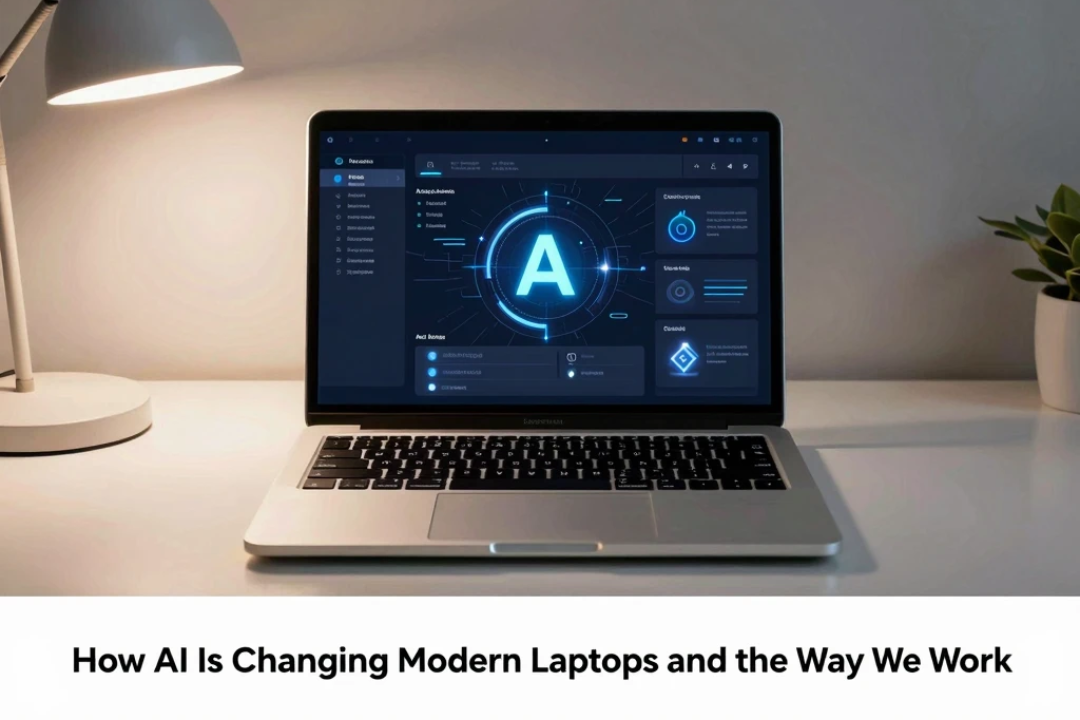
Artificial intelligence is one of the biggest forces influencing the computer industry.
Modern AI PCs are designed with hardware capable of handling certain AI workloads more efficiently. This can include dedicated AI processing capabilities alongside traditional CPU and GPU resources.
Instead of sending every AI task to a remote cloud service, some workloads can increasingly be handled locally on the laptop.
This approach can provide several potential advantages:
- Faster responses for supported tasks
- Reduced dependence on internet connectivity
- Better privacy for certain local processing
- Improved power efficiency for specific workloads
- New AI-powered applications
The goal is not simply to put an AI assistant on a laptop. The bigger change is integrating AI into the operating system and applications.
2. AI Will Become Part of Everyday Laptop Use
In the future, AI may become less visible but more useful.
Instead of opening a separate AI application, users may interact with AI features directly through their operating system and everyday software.
Imagine asking your laptop to:
- Find a specific document
- Summarize a long report
- Organize notes
- Improve a presentation
- Remove unwanted objects from an image
- Translate a conversation
- Generate meeting summaries
- Search through personal files
- Adjust settings automatically
Some of these capabilities are already appearing in modern software, while future systems are likely to integrate them more deeply.
The result could be a laptop that feels more like an intelligent assistant than a traditional computer.
3. Dedicated AI Hardware Will Matter More
Traditional laptops rely heavily on the CPU and GPU.
Next-generation devices are increasingly adding specialized hardware designed for AI workloads.
This can include neural processing units and other dedicated acceleration technologies.
The advantage is that specialized hardware can handle certain AI operations more efficiently than using a general-purpose processor for everything.
This could be particularly useful for:
- AI image processing
- Voice recognition
- Background effects
- Video conferencing
- Local language models
- Content creation
- Real-time translation
- Intelligent search
As AI software becomes more demanding, dedicated AI hardware is likely to become an increasingly important part of laptop design.
4. Foldable Displays Could Change Laptop Design
One of the most interesting developments in the future of laptop technology is the foldable display.
Traditional laptops usually have a fixed screen size. Foldable devices can provide a larger display area while remaining relatively compact when folded.
A foldable laptop could potentially function as:
- A traditional notebook
- A larger tablet
- A portable workstation
- A dual-screen computer
Instead of carrying a large monitor, users could unfold the laptop when they need additional workspace.
This could be particularly useful for professionals who frequently work with multiple windows.
5. Dual-Screen Laptops May Become More Practical
Foldable displays are not the only way laptop designs can provide more screen space.
Some next-generation devices may use multiple displays or innovative screen arrangements.
For example, one screen could be used for the main application while another provides:
- A keyboard interface
- Notes
- Communication tools
- Reference material
- Creative controls
- Productivity widgets
This could change how people interact with computers.
However, manufacturers will need to solve challenges involving durability, software support, battery consumption, and price before these designs become mainstream.
6. Longer Battery Life Will Remain a Major Goal
Performance is important, but battery life is one of the most important factors in a portable computer.
Future laptops are likely to focus heavily on energy efficiency.
Several technologies can contribute to this goal:
- More efficient processors
- Better power management
- Smarter AI workload scheduling
- Improved displays
- More efficient wireless connectivity
- Better battery technology
- Intelligent background task management
AI could also help manage power consumption by understanding how the laptop is being used.
For example, the system could reduce unnecessary background activity when it detects that the user is trying to maximize battery life.
7. Smarter Battery Management
Future laptops may become better at understanding individual usage patterns.
Instead of using the same power profile throughout the day, a laptop could automatically adjust performance based on workload.
For light tasks, it could prioritize efficiency.
When demanding software is launched, it could increase performance.
This dynamic approach could provide a better balance between speed and battery life.
For users who travel frequently, these improvements could be particularly valuable.
8. Faster and More Efficient Connectivity
The future of laptops will also depend on connectivity.
Modern users increasingly expect fast and reliable internet connections wherever they work.
Future devices are likely to continue improving wireless technologies while supporting faster external connections and high-speed accessories.
This could make it easier to:
- Transfer large files
- Connect external displays
- Use wireless accessories
- Join high-quality video meetings
- Access cloud applications
- Work remotely
As cloud computing and AI services continue to develop, reliable connectivity will remain an important part of the laptop experience.
9. Laptops Could Become More Like Personal AI Hubs
The traditional computer is primarily a tool that waits for commands.
Future laptops could become more proactive.
With appropriate user controls, an AI-powered laptop could understand patterns and provide assistance before the user explicitly asks.
For example, it might recognize that you have an upcoming meeting and help organize relevant documents or provide a summary of previous notes.
The important factor will be control.
Users should be able to decide what information the laptop can access and which AI features are enabled.
10. Better Displays Beyond Higher Resolution
Display technology is likely to continue evolving.
Future laptops may focus on more than simply increasing resolution.
Manufacturers can improve:
- Color accuracy
- Brightness
- Contrast
- Refresh rates
- Energy efficiency
- Touch interaction
- HDR performance
- Flexibility
Foldable and flexible displays could create entirely new laptop form factors.
At the same time, traditional laptops may continue improving through brighter, more efficient, and higher-quality panels.
11. Improved Webcam and Audio Technology
Remote work, online education, and video meetings have made webcams and microphones more important than ever.
Future laptops could use AI to improve video and audio quality in real time.
Potential features include:
- Better background noise reduction
- Improved voice clarity
- Automatic framing
- Background blur
- Lighting adjustments
- Eye-contact assistance
- Automatic image enhancement
Instead of requiring separate software for every enhancement, these capabilities could increasingly become built into the laptop itself.
12. More Advanced Security
As laptops become more connected and intelligent, security will become even more important.
Future devices may combine hardware and software security with advanced biometric authentication and AI-assisted threat detection.
Possible improvements include:
- Faster biometric authentication
- Better malware detection
- Hardware-based security
- More secure local AI processing
- Improved privacy controls
- Smarter suspicious-activity detection
Security will become especially important as laptops begin processing more personal and professional information locally.
13. Privacy Will Become a Bigger Selling Point
AI-powered computers may have access to more personal information than traditional devices.
That makes privacy an increasingly important consideration.
Users will want to know:
- What information is being processed
- Where processing happens
- Which applications have access
- Whether information is stored locally
- When AI features are active
This could encourage manufacturers to provide clearer privacy controls and more on-device processing.
The ability to perform certain AI tasks locally may become a significant selling point.
14. Better Laptop Materials and Sustainable Design
Laptop manufacturers are also under pressure to think about sustainability.
Future designs may focus more heavily on:
- Recycled materials
- Energy efficiency
- Longer product lifespans
- Repairability
- Replaceable components
- Reduced packaging
- More efficient manufacturing
A laptop that lasts longer can reduce the need for frequent replacement.
For consumers, durability may become just as important as processor speed.
15. Laptops May Become More Modular
Traditional laptops can be difficult to upgrade compared with desktop computers.
However, there is growing interest in designs that make certain components easier to replace or upgrade.
Future laptops could potentially offer greater flexibility around:
- Storage
- Memory
- Batteries
- Wireless modules
- Ports
- Other internal components
Modular designs could extend the useful life of a laptop and reduce electronic waste.
The challenge is balancing upgradeability with the industry’s demand for thinner and lighter devices.
16. The Laptop and Tablet Difference Could Become Smaller
Foldable displays and touch-focused interfaces may blur the difference between laptops and tablets.
A single device could potentially transform between different modes depending on the user’s needs.
For example:
Laptop mode: traditional productivity.
Tablet mode: reading, drawing, browsing, and entertainment.
Tent mode: presentations or video watching.
Large-screen mode: multitasking and professional work.
This flexibility could make hybrid devices increasingly attractive.
17. Cloud Computing Will Still Matter
Even with better local AI processing, cloud computing is not going away.
Powerful remote servers can handle workloads that would be difficult or inefficient for a thin laptop.
Future laptops will likely use a combination of local and cloud processing.
Lightweight tasks can happen on the device, while extremely demanding workloads can use cloud infrastructure.
This hybrid approach could provide users with the best combination of portability and computing power.
18. The Future Laptop Could Be More Personalized
Personalization may become one of the biggest changes.
Instead of every laptop behaving in almost the same way, AI could allow computers to adapt to individual users.
A future laptop might learn:
- Preferred applications
- Typical working hours
- Frequently used files
- Common workflows
- Display preferences
- Performance requirements
- Communication habits
However, personalization should always be accompanied by transparent privacy controls.
Users should remain in control of what the computer learns and remembers.
Future Laptop Technologies at a Glance
| Technology | Potential Benefit |
|---|---|
| AI PCs | Smarter local computing |
| Dedicated AI hardware | More efficient AI processing |
| Foldable displays | Larger workspace in a portable design |
| Better processors | Higher performance and efficiency |
| Improved batteries | Longer mobile use |
| AI power management | Smarter energy consumption |
| Advanced webcams | Better video communication |
| Local AI processing | Faster and potentially more private AI tasks |
| Better connectivity | Faster data and cloud access |
| Modular designs | Easier upgrades and longer lifespan |
| Advanced security | Better protection of personal data |
What Should You Look for in a Future-Ready Laptop?
You do not necessarily need every futuristic feature today.
If you are buying a laptop now, consider features that are likely to remain useful for several years.
Look for:
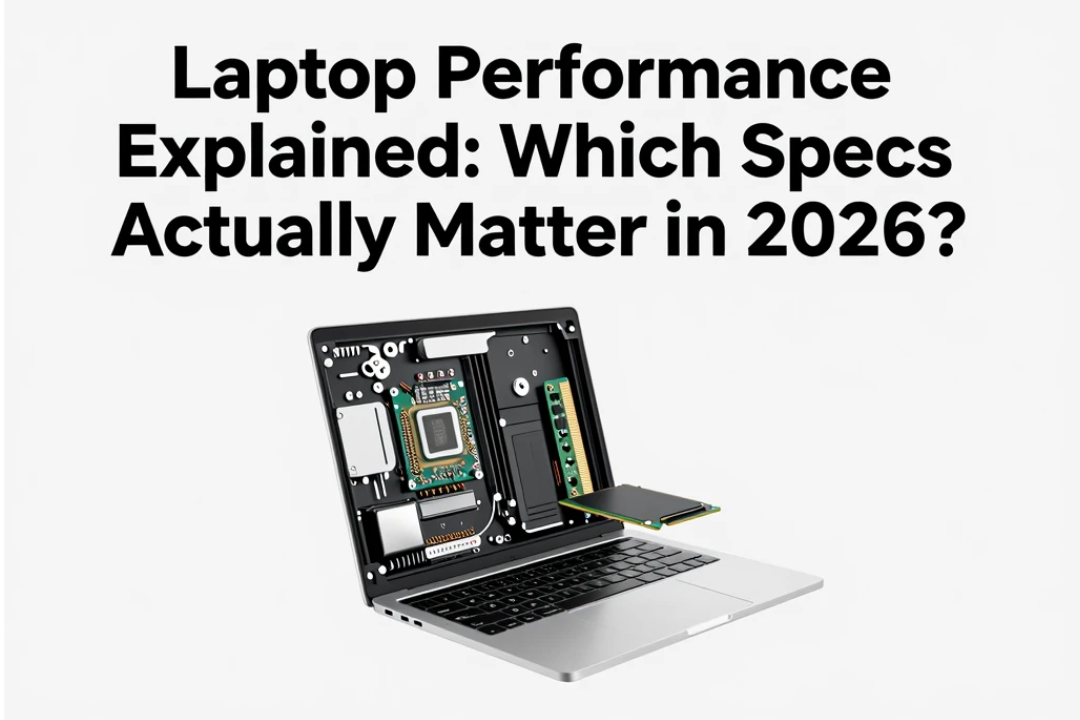
- A modern efficient processor
- Sufficient RAM
- Fast SSD storage
- Good battery life
- High-quality display
- Strong wireless connectivity
- Modern ports
- Reliable security features
- Good webcam and microphone
- Long software-support expectations
- AI capabilities if they are relevant to your workflow
The most expensive laptop is not automatically the most future-proof.
A balanced configuration that matches your needs is often a better investment.
Challenges Facing Future Laptops
Despite exciting developments, the next generation of laptops will face several challenges.
Higher Prices
New technologies such as foldable displays and advanced AI hardware can increase manufacturing costs.
Durability
Moving displays and flexible components need to withstand years of daily use.
Battery Demands
More powerful AI features can consume additional energy if they are not efficiently implemented.
Software Compatibility
New hardware is only useful if applications are optimized to take advantage of it.
Privacy Concerns
More intelligent computers may require access to more personal information, making privacy controls essential.
Will Traditional Laptops Disappear?
Probably not anytime soon.
Traditional clamshell laptops are simple, practical, and relatively affordable.
Foldable and hybrid devices may provide additional options, but many users may continue choosing conventional laptops because they offer a familiar design and proven usability.
The future is more likely to provide more choices rather than completely replace the traditional laptop.
Frequently Asked Questions
What is the future of laptops?
The future of laptops is likely to focus on AI-powered computing, improved battery efficiency, foldable and flexible displays, better connectivity, advanced security, and smarter software.
What are AI PCs?
AI PCs are computers designed with hardware and software capabilities that can efficiently handle artificial intelligence workloads, including certain tasks locally on the device.
Are foldable laptops worth buying?
Foldable laptops can provide innovative designs and larger displays in a portable form, but buyers should consider price, durability, software compatibility, and whether the additional flexibility is useful for their workflow.
Will AI replace traditional laptop software?
AI is more likely to become integrated into traditional applications rather than completely replace them. AI can assist with tasks while conventional software continues handling core functions.
Will future laptops have better battery life?
Battery efficiency is likely to remain a major area of development. More efficient processors, improved power management, better displays, and advances in battery technology could contribute to longer runtime.
Will laptops replace tablets?
Not necessarily. However, foldable and hybrid devices may continue to blur the line between laptops and tablets.
Are AI laptops more secure?
AI capabilities alone do not automatically make a laptop secure. Security depends on hardware protections, operating-system security, software updates, user practices, and privacy controls.
Final Thoughts
The future of laptops is not simply about making computers faster.
The next generation of devices is likely to be more intelligent, efficient, flexible, connected, and personalized.
AI PCs could bring more useful processing directly to the device. Foldable displays could provide larger workspaces without making laptops dramatically larger. Better processors and battery technologies could improve portability, while smarter software could automate everyday tasks.
At the same time, manufacturers will need to address important challenges involving price, durability, privacy, security, and sustainability.
The most exciting part is that the laptop is no longer just evolving as a traditional notebook computer. It is becoming a flexible computing platform that can adapt to different types of work and different user needs.
For consumers, this means the next few years could bring some of the most interesting changes the laptop industry has seen in a long time.
The laptop of the future may not simply run your applications. It may understand your workflow, help you complete tasks, manage its own resources, and adapt to the way you work.