






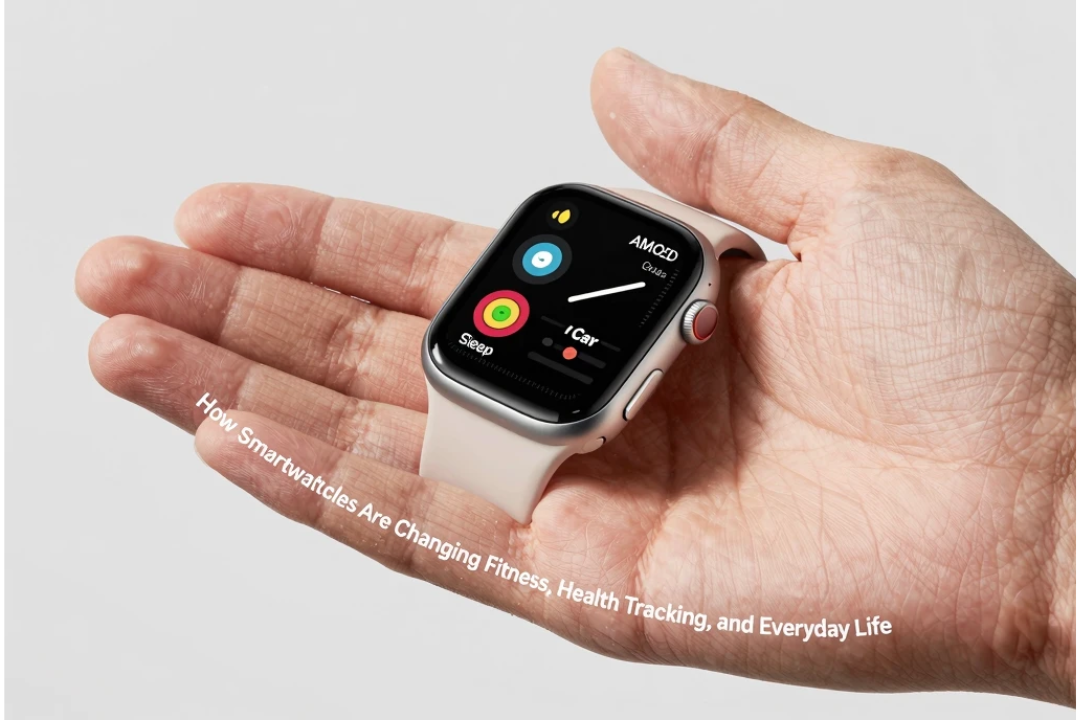
Smartwatches have become much more than stylish accessories for checking the time. Over the past few years, wearable technology has transformed the way people exercise, monitor their health, communicate, and manage everyday tasks. In 2026, smartwatches are becoming increasingly useful thanks to better sensors, improved battery life, advanced fitness tools, and smarter software.
From tracking daily steps to monitoring sleep and heart rate, a smartwatch can provide valuable information throughout the day. Many devices can also display notifications, answer calls, provide directions, control music, and support contactless payments.
The growing popularity of smartwatches raises an important question: How are smartwatches changing fitness, health tracking, and everyday life?
Let’s explore the biggest ways wearable technology is influencing modern lifestyles.
Smartwatches Are Changing the Way People Exercise
One of the biggest impacts of smartwatches has been on fitness. Traditional watches simply showed the time, but modern smartwatches can act as personal fitness companions.
Most fitness-focused smartwatches can track activities such as walking, running, cycling, swimming, strength training, and other workouts.
During an exercise session, a smartwatch may record information including:
- Workout duration
- Distance traveled
- Heart rate
- Calories burned
- Steps
- Pace
- Speed
- Active minutes
- Workout intensity
Having this information available on your wrist can make workouts more measurable and easier to understand.
For example, a runner can use GPS to measure distance and pace, while someone trying to become more active can monitor daily steps and activity goals.
Personalized Fitness Goals
Another major advantage of smartwatches is the ability to set personalized goals.
Instead of simply exercising without tracking progress, users can establish daily or weekly targets. These might include reaching a specific number of steps, completing a certain amount of exercise, or maintaining regular activity throughout the week.
Many smartwatch platforms provide reminders when users have been inactive for too long. These small notifications can encourage people to stand up, walk around, or take a short break.
Over time, this can help create healthier daily routines.
Health Tracking Has Become More Accessible
Smartwatches have also changed the way people think about everyday health information.
Modern wearable devices can monitor several health-related metrics continuously or periodically, depending on the model.
Common features include:
- Heart-rate monitoring
- Sleep tracking
- Blood oxygen measurements
- Stress tracking
- Respiratory information
- Skin temperature measurements
- Activity monitoring
The biggest advantage is convenience. Instead of manually recording information, the smartwatch can collect data automatically while the user goes about their day.
However, smartwatch health features should not be considered a replacement for professional medical equipment or medical advice. Their primary purpose is generally wellness, fitness, and providing useful information about personal trends.
Heart-Rate Monitoring
Heart-rate tracking is one of the most widely used smartwatch health features.
A smartwatch can monitor heart rate during exercise and, on supported devices, throughout the day. Users can see how their heart rate changes during workouts, rest, and different activities.
For fitness enthusiasts, heart-rate information can help understand workout intensity.
For everyday users, seeing changes in resting heart rate over time may provide useful personal insights. If someone notices unusual or concerning results, however, they should discuss them with a qualified healthcare professional rather than relying solely on a smartwatch.
Sleep Tracking Is Becoming More Popular
Sleep is an essential part of overall health, and smartwatches have made sleep tracking more accessible.
When worn overnight, compatible smartwatches can estimate sleep duration and provide information about different sleep patterns.
Some devices may provide insights into:
- Total sleep time
- Sleep consistency
- Sleep stages
- Overnight heart rate
- Breathing patterns
- Sleep schedules
This information can help users identify habits that may be affecting their sleep.
For example, someone might discover that they consistently go to bed later than planned or get significantly less sleep during busy workdays.
The goal is not simply to collect data but to use it to make better lifestyle decisions.
Smartwatches Encourage More Movement
Modern lifestyles often involve long periods of sitting. Office work, studying, driving, and entertainment can all reduce daily physical activity.
Smartwatches attempt to address this problem by providing movement reminders.
A simple notification asking you to stand or walk can serve as a useful reminder during a busy day.
Some devices also track standing time, active minutes, and daily movement patterns.
While a smartwatch cannot force someone to exercise, it can provide regular reminders that encourage healthier habits.
GPS Has Changed Outdoor Fitness
Built-in GPS has made smartwatches especially useful for outdoor activities.
Runners, cyclists, hikers, and walkers can record their routes without depending entirely on a smartphone.
GPS-enabled smartwatches can provide information such as distance, pace, route, and location.
For outdoor enthusiasts, this can make workouts more convenient because they don’t always need to carry a phone.
More advanced devices may support multiple satellite positioning systems, improving location tracking in different environments.
Smartwatches Are Improving Everyday Productivity
The impact of smartwatches isn’t limited to fitness.
They are increasingly becoming everyday productivity tools.
Instead of reaching for a smartphone every time a notification arrives, users can quickly glance at their wrist.
Smartwatches can display notifications for:
- Text messages
- Calls
- Emails
- Calendar events
- Weather updates
- Social media notifications
- App alerts
This can save time and reduce the need to constantly check a smartphone.
For busy professionals, students, and people who receive frequent notifications, this can make everyday communication more convenient.
Calls and Messages From Your Wrist
Many modern smartwatches support communication features.
Depending on the model and smartphone ecosystem, users may be able to answer calls, send quick replies, or communicate using voice commands.
Some cellular-enabled smartwatches can connect directly to mobile networks, allowing users to perform certain communication tasks without having their smartphone nearby.
This can be particularly useful during workouts, walks, or situations where carrying a phone is inconvenient.
Smartwatches and Contactless Payments
Digital payments have become another useful smartwatch feature.
Compatible devices can allow users to make contactless payments by simply tapping their watch against a supported payment terminal.
This can be convenient when shopping, traveling, exercising, or commuting.
Instead of taking a smartphone or wallet out of your pocket, the smartwatch can provide quick access to supported payment services.
Availability depends on the smartwatch platform, payment provider, bank, card, and country.
Smartwatches Are Becoming More Personalized
Modern smartwatches can be customized according to individual preferences.
Users can often change watch faces, widgets, notifications, shortcuts, and app layouts.
Someone focused on fitness might prioritize heart rate, workout shortcuts, and activity goals.
A business professional might prefer a watch face showing the calendar, weather, and upcoming appointments.
This personalization makes the smartwatch more useful because the information displayed can match the user’s daily priorities.
Artificial Intelligence Is Bringing Smarter Experiences
Artificial intelligence is becoming an increasingly important part of wearable technology.
In 2026, AI-powered features can help interpret data and provide more personalized insights.
Instead of simply showing numbers, future-focused smartwatch software can potentially help users understand patterns in activity, sleep, workouts, and daily routines.
For example, an AI-powered system might summarize recent activity or provide suggestions based on an individual’s exercise patterns.
The usefulness of these features depends heavily on software quality and how responsibly health-related information is presented.
Smartwatches Can Help Build Better Habits
One of the most interesting effects of wearable technology is behavioral.
People often become more aware of their habits when they can see them represented through numbers and trends.
A person who discovers that they walk only a few thousand steps per day may decide to take more walks.
Someone who notices inconsistent sleep patterns may try to establish a more regular bedtime.
Similarly, a runner can use workout statistics to monitor progress toward a personal goal.
The smartwatch itself does not create healthy habits. Instead, it provides feedback that can help users make more informed decisions.
Are Smartwatches Replacing Smartphones?
Smartwatches are becoming more capable, but they are not complete smartphone replacements for most people.
A smartphone still provides a much larger screen, more powerful applications, easier typing, advanced photography, browsing, and many other capabilities.
Instead, smartwatches work best as a companion device.
They can handle quick tasks while the smartphone remains responsible for more demanding activities.
This relationship may become even more important as wearable technology continues to improve.
What Are the Limitations of Smartwatches?
Despite their advantages, smartwatches have limitations.
Battery life remains an important consideration. Advanced features such as GPS, cellular connectivity, continuous sensors, and always-on displays can increase power consumption.
Sensor accuracy can also vary between devices and situations.
Health-related measurements should not automatically be interpreted as medical diagnoses. Environmental conditions, device placement, movement, and other factors can affect readings.
Privacy is another consideration. Smartwatches collect personal information, so users should understand what data is collected, where it is stored, and which services can access it.
The Future of Smartwatch Technology
The future of smartwatches is likely to focus on better sensors, smarter software, longer battery life, improved connectivity, and more personalized experiences.
As technology develops, wearable devices may become better at understanding individual activity patterns and providing useful recommendations.
Artificial intelligence could also make interactions more natural and help users make sense of large amounts of personal fitness information.
However, the most successful smartwatches will likely be those that combine useful technology with simplicity. Users don’t necessarily need hundreds of features. They need reliable features that solve real problems.
Frequently Asked Questions
How are smartwatches changing fitness?
Smartwatches make fitness more measurable by tracking activities, heart rate, distance, calories, workouts, and other metrics. They also provide goals and reminders that can encourage regular physical activity.
Can smartwatches improve health awareness?
Yes. Smartwatches can provide information about activity, sleep, heart rate, and other wellness metrics. This information may help users understand personal patterns, although smartwatches should not replace professional medical care.
Are smartwatches useful for everyday life?
Yes. Beyond fitness, smartwatches can display notifications, support calls and messages, provide navigation, control music, show weather information, and support contactless payments on compatible devices.
Do smartwatches replace smartphones?
For most users, no. Smartwatches are better viewed as companion devices that handle quick tasks while smartphones remain useful for more advanced activities.
Are smartwatch health readings accurate?
Accuracy varies by device, sensor, activity, and measurement. Smartwatch data can be useful for general wellness and tracking trends, but medical concerns should be evaluated using appropriate medical equipment and professional advice.
Final Thoughts
Smartwatches are changing modern life by combining fitness tracking, health awareness, communication, productivity, and convenience in a small wearable device.
Their biggest advantage isn’t simply the number of features they offer. It is the ability to provide useful information at the right time.
Whether you’re trying to exercise more, understand your sleep habits, stay connected without constantly checking your phone, or simply organize your day, a smartwatch can become a useful part of your routine.
As wearable technology continues to evolve in 2026 and beyond, smarter sensors, artificial intelligence, improved battery technology, and personalized software are likely to make smartwatches even more useful.
The future of wearable technology is not just about putting more technology on your wrist. It is about making everyday technology more personal, convenient, and helpful.